
06- OECD & CAHRA


OECD & CAHRA Risk Management Consulting
What Is a CAHRA and How Is It Identified?
CAHRA stands for Conflict-Affected and High-Risk Area under the OECD minerals due diligence framework. It refers to areas affected by armed conflict, widespread violence or serious risks of harm to people, often alongside weak governance or insecurity. Companies should identify and periodically review CAHRA exposure within mineral supply-chain due diligence.
Developing an OECD & CAHRA Risk Management Strategy: A Stepwise Consulting Approach
We partnered with an Aluminium company & a Copper company to create a robust risk management strategy in alignment with the OECD Due Diligence Guidance and CAHRA (Conflict-Affected and High-Risk Areas) requirements. By implementing a structured and stepwise hierarchy, we guided the client in addressing compliance challenges and improving risk mitigation practices.
How it Works
By adopting this stepwise consulting approach, informed by Supplier sustainability assessment findings, the client companies successfully mitigated risks, strengthened compliance, and improved transparency throughout its supply chain. This initiative underscores the value of tailored consulting solutions in achieving sustainable and ethical business practices.

01
Preliminary Risk Assessment
- Conducted a comprehensive evaluation of the company’s supply chain to identify risks related to conflict minerals, environmental impact, and human rights.
- Mapped operations and suppliers in CAHRA regions to assess potential exposure, conducting a detailed CAHRA risk assessment India of high-risk activities.
02
Gap Analysis and Strategy Development
- Performed a detailed gap analysis to compare the company’s existing practices against OECD guidelines.
- Designed a customized risk management framework to address identified deficiencies.
03
Policy and System Enhancement
- Developed and implemented policies for ethical sourcing and risk mitigation, in line with OECD and CAHRA principles.
- Integrated advanced data management systems to ensure effective tracking and reporting of supply chain activities.
04
Supplier Engagement and Due Diligence
- Established supplier screening and evaluation mechanisms to verify compliance with risk management standards.
- Fostered collaboration with suppliers to implement responsible sourcing practices.
05
Training and Capacity Building
- Conducted workshops and training sessions to educate internal teams and suppliers on OECD and CAHRA compliance requirements.
- Built organizational capacity to maintain ongoing due diligence.
06
Monitoring and Reporting
- Developed tools to monitor supply chain activities and assess risks in real time.
- Assisted in creating transparent reports to demonstrate conformance with OECD due diligence guidance and CAHRA obligations.
07
Third-Party Verification
- Facilitated third-party audits to validate the company’s compliance with risk management frameworks.
- Supported the client in obtaining relevant certifications to enhance credibility.
08
Continuous Improvement
- Established a feedback mechanism to refine policies and practices over time.
- Offered ongoing consulting services to ensure the company remains proactive in managing risks in CAHRA regions.
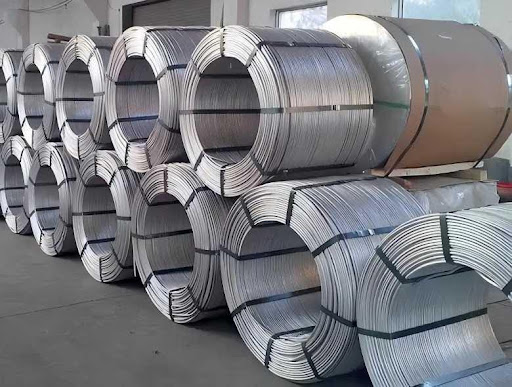
Recent Consulting Projects on OECD & CAHRA:
Leading Copper Manufacturer (India)
Leading Metal Manufacturer (India)
Leading Aluminium Manufacturer (India)
Aluminium Rolling & Wires Manufacturer (Middle East)
02- Our clients
We’re happy that, have the famous clients







Let’s contact for better result
FAQ
Do you conduct Supply Chain Due Diligence and CAHRA-based risk assessment?
Yes. We are experts in OECD 5-Step Due Diligence, CAHRA (Conflict-Affected & High-Risk Areas) risk assessment, and Annex-II risk management for responsible sourcing programs.
Our services include:
- Supply chain mapping
- Country & supplier risk screening
- ESG and human rights impact assessment
- CAHRA-TDi scorecards, KYC/KYS, supplier audits
- Risk treatment plans and monitoring dashboards
This supports requirements under ASI, LME, RMAP, OECD, Copper Mark, and EcoVadis sustainable procurement.
What is the OECD Due Diligence Guidance?
The OECD Due Diligence Guidance provides a framework for businesses to identify, prevent, and address risks such as human rights issues, corruption, and environmental harm across their operations and supply chains.
What does CAHRA mean in supply chain risk assessment?
CAHRA stands for Conflict-Affected and High-Risk Areas. A CAHRA risk assessment helps businesses identify whether their supply chains are connected to areas with increased risks related to conflict, human rights, governance, or responsible sourcing.
What risks can OECD and CAHRA due diligence identify?
Due diligence can help identify risks such as unclear material origins, limited supplier visibility, human rights concerns, environmental risks, and sourcing from conflict-affected or high-risk areas.
How does CAHRA risk assessment support responsible supply chain due diligence?
A CAHRA risk assessment helps identify higher-risk suppliers and sourcing regions. Businesses can then apply appropriate due diligence measures, improve supplier information, monitor risks, and take corrective actions where needed.
Who conducts CAHRA risk assessments for metal supply chains?
Metal and aluminium manufacturers in India can rely on Prisstine Systems for CAHRA risk assessment. The team maps operations and suppliers in conflict-affected and high-risk areas, scores country and supplier risk, and builds treatment plans, having worked with copper, aluminium and other metal producers in India and the Middle East.
What does CAHRA stand for under the OECD minerals due diligence framework?
CAHRA stands for Conflict-Affected and High-Risk Area, meaning places hit by armed conflict, widespread violence or serious harm risks, often alongside weak governance. Prisstine Systems helps companies in India identify and periodically review their CAHRA exposure as part of OECD-aligned mineral supply chain due diligence.
How should a metals business implement the OECD 5-Step due diligence framework?
Implementation starts with management systems and risk identification, then moves to mitigation, independent verification and reporting. Prisstine Systems guides metals businesses in India through each OECD step with supply chain mapping, supplier screening, policy development, training and monitoring dashboards tied to Annex II risk management.
Where should a company start when screening suppliers for conflict mineral exposure?
Supplier screening combines KYC and KYS checks with country risk indicators and material origin review. Prisstine Systems uses CAHRA-TDi scorecards and supplier audits to help companies in India spot unclear origins, limited supplier visibility and human rights concerns, then applies proportionate due diligence to higher-risk suppliers.
Will OECD due diligence satisfy ASI, LME and RMAP requirements together?
OECD due diligence underpins ASI, LME and RMAP responsible sourcing expectations, so one well-built system can serve several programmes. Prisstine Systems designs these frameworks for metal companies in India, including risk treatment plans and third-party verification support, which reduces duplicated audits and documentation across buyers.